Tortoises and turtles are some of the longest-lived pets you can own, and they are popular in the UAE: Sulcata tortoises in villa gardens across Mirdif, Mizhar and Al Khawaneej, and water turtles in tanks in apartments. They are hardy animals, but they hide illness well, and many health problems come from small mistakes in diet, heat or lighting.
This guide covers the basics for both, and the signs that mean it is time to see a vet.
Tortoise or Turtle? Know Which You Have
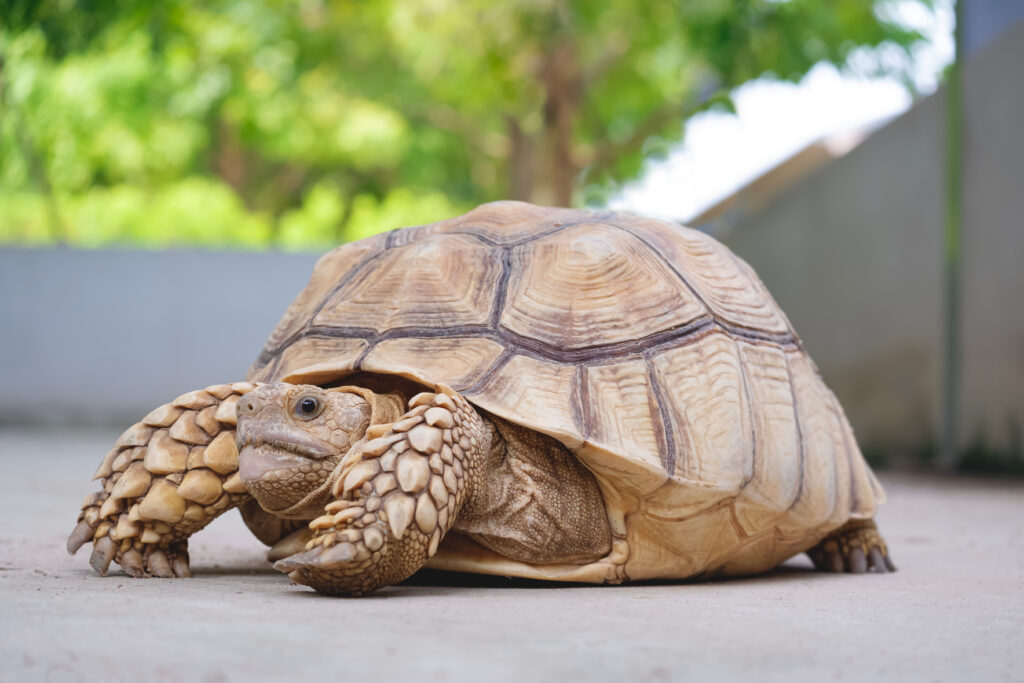
- Tortoises live on land. They have domed shells and sturdy, elephant-like legs, and they drink and soak in shallow water but cannot swim. The most common in the UAE is the Sulcata (African spurred tortoise).
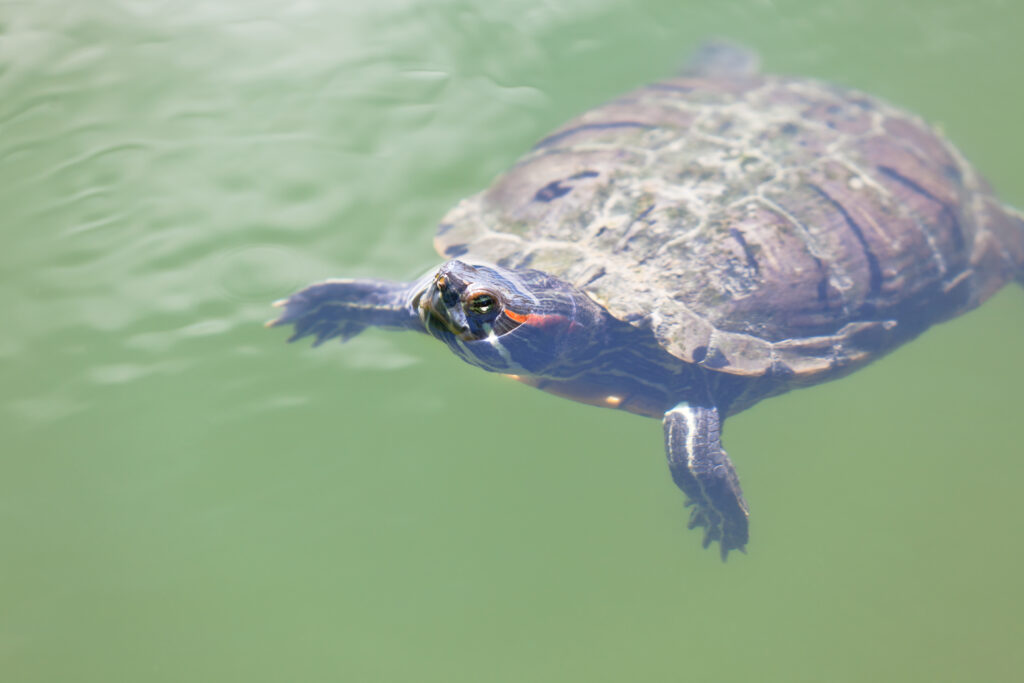
- Turtles such as red-eared sliders live mostly in water. They have flatter shells and webbed feet, and need a proper aquarium with a basking area.
Sulcata Tortoises in UAE Gardens
They grow very big and live very long
A small Sulcata bought as a hatchling can grow into a very large, heavy adult that digs and pushes hard, and many live for more than 50 years. Plan for a secure garden space and for the long term before you buy one.
Heat and shade
Sulcatas come from hot, dry regions, but the peak of a UAE summer is still too much in direct sun. Your tortoise needs:
- Deep shade all day, plus a shelter or burrow where it can escape the midday heat
- A shallow water dish it can easily climb in and out of, refreshed daily
- Morning and late-afternoon sunshine, which helps it make vitamin D3 for a strong shell
- A warm, dry shelter on cooler winter nights
Check the garden for gaps under gates and walls. Tortoises are surprisingly good escape artists.
Diet
Sulcatas are grazers. Their diet should be high in fibre and low in protein:
- Grass, hay and safe weeds as the main food
- Leafy greens and edible flowers for variety
- A calcium supplement as advised by your vet
- Fruit only rarely, if at all
Never feed dog or cat food, meat or bread. Too much protein is a common cause of lumpy, pyramid-shaped shell growth and kidney problems.
Water Turtles at Home
- A big tank: turtles grow, and need much more space than the small tanks they are often sold in.
- Strong filtration and regular water changes. Dirty water causes skin, shell and eye infections.
- A dry basking area with a heat lamp and a UVB light, which they need for healthy shells and bones. Replace UVB bulbs as recommended, as they weaken over time even if they still glow.
- A balanced diet of quality turtle pellets with leafy greens. Avoid feeding only dried shrimp.
- Good hygiene. Reptiles can carry Salmonella, so wash your hands after handling them or cleaning the tank, especially around young children.
- Never release a pet turtle outdoors. It is unkind to the turtle and harmful to local wildlife.
Signs Your Tortoise or Turtle Needs a Vet
- Not eating, or much less active than normal
- Swollen or closed eyes
- Bubbles or discharge from the nose, wheezing or open-mouth breathing
- A soft, cracked, smelly or discoloured shell
- Turtles floating lopsided or unable to dive
- Diarrhoea, or no droppings for a long time
- Any injury, including bites from dogs, which are common in gardens
Reptiles hide illness until it is advanced, so early checks matter. Bring your tortoise or turtle in a secure box with a towel, keeping it at a comfortable temperature on the journey.
Frequently Asked Questions
Does my Sulcata tortoise hibernate in the UAE?
No. Sulcatas do not hibernate. They may slow down on cooler winter days, but a tortoise that stops eating for a long time should be checked by a vet.
Why does my turtle have swollen eyes?
Swollen eyes in turtles are often linked to poor diet, especially low vitamin A, or to dirty water and infection. It needs a vet check rather than eye drops from a pet shop.
How often should a tortoise or turtle see a vet?
We recommend a yearly health check, including a weight check and a stool test for parasites, plus a visit any time something seems wrong.
Reptile and Exotic Care in Mirdif
Synergy Veterinary Clinic on 37th St, Mirdif, cares for exotic pets as well as cats and dogs, and is close to Mizhar, Al Warqa, Al Khawaneej and Rashidiya. Message us on WhatsApp or call 055 286 6044. Also read our guide to signs your bird is sick.